From AI output to scientific confidence.
Evidence-based reliability assessment for biopharma imaging workflows.
PTI weighs the supporting and conflicting evidence around a defined AI-assisted task and makes the uncertainty explicit. We start with one imaging workflow, agreed success conditions and independent expert review.
Your team retains clinical decisions and authority. PTI informs them; it does not replace them.
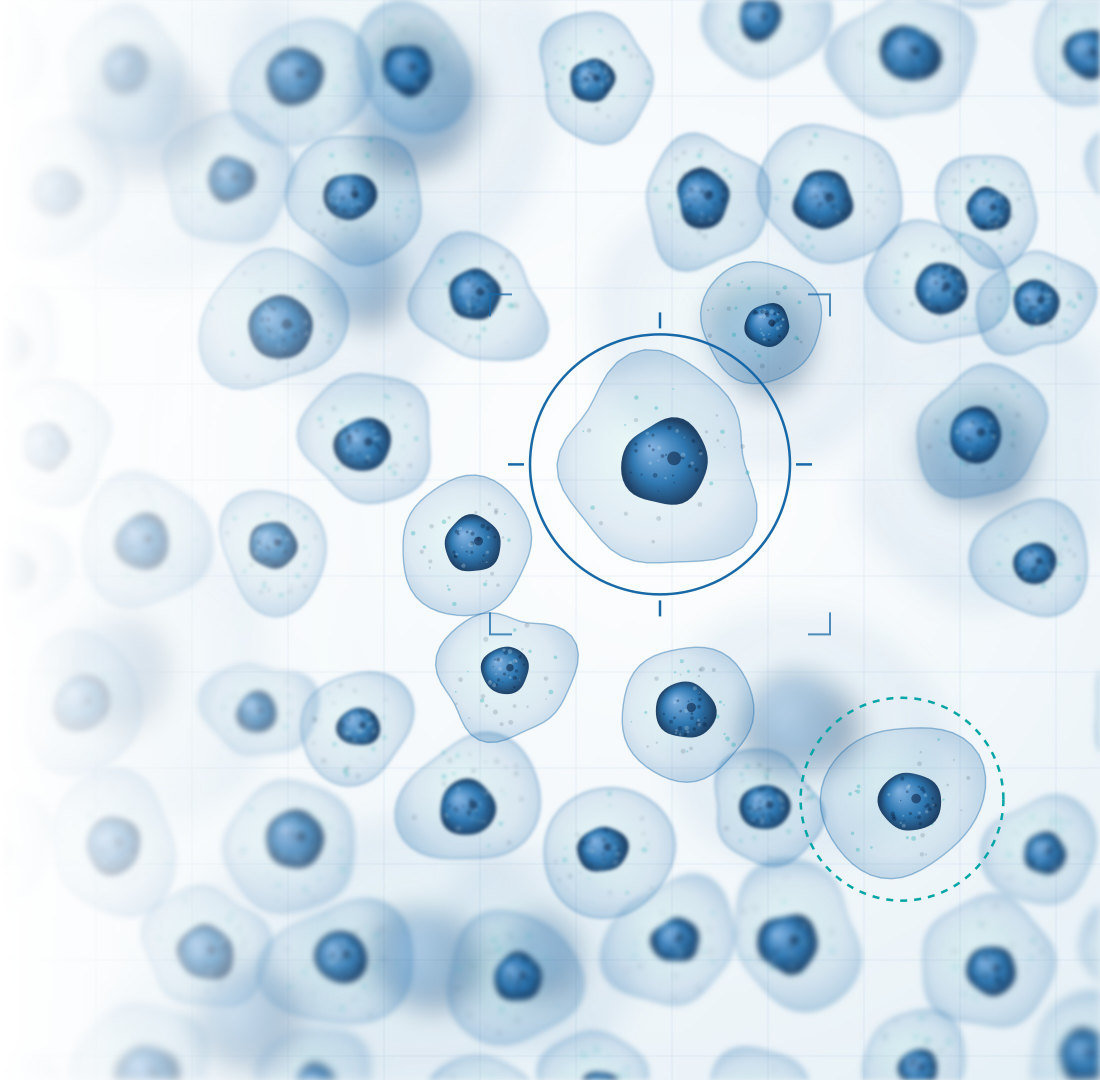
Your imaging AI has an answer. What supports it?
Bring supporting evidence, conflicting evidence and uncertainty into view.
The AI output
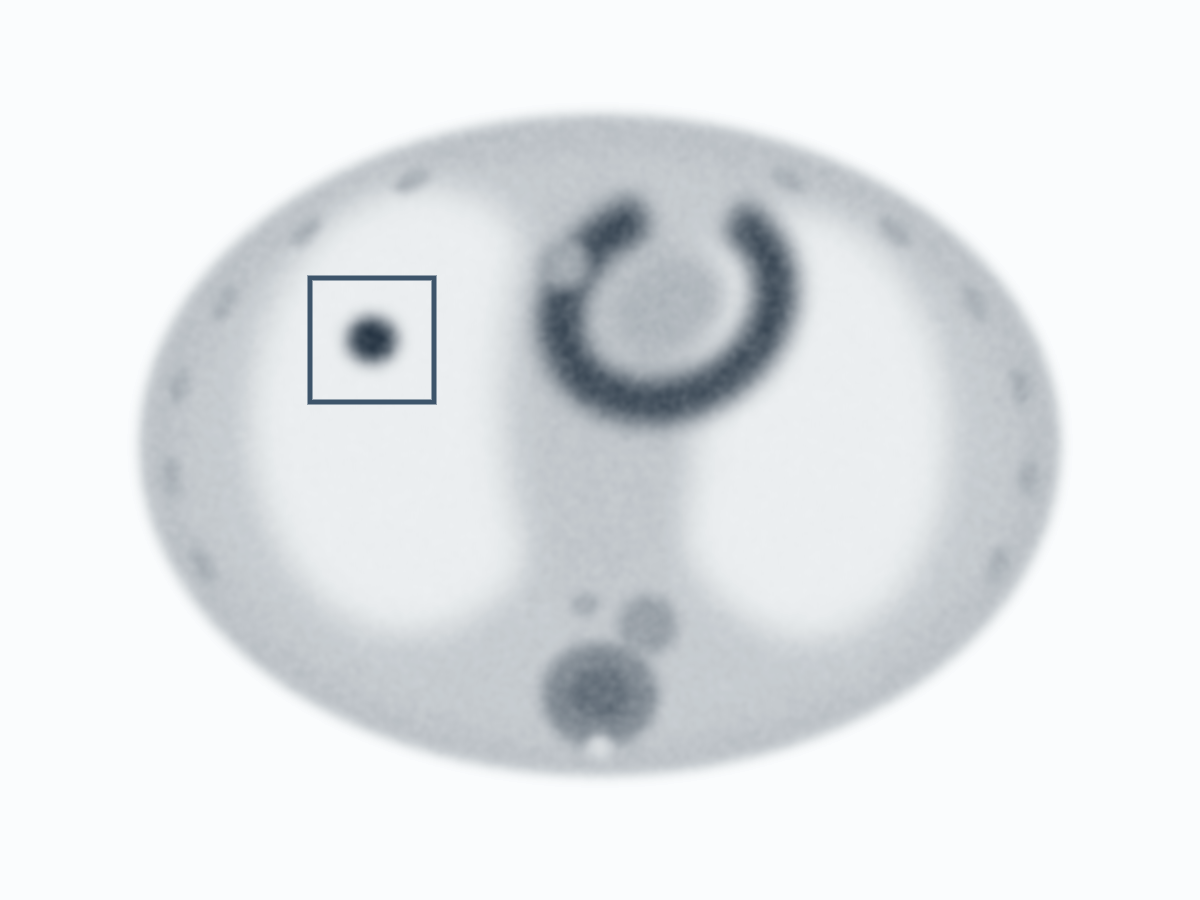
The evidence behind the output
Claim being assessed: “The flagged finding is supported by the available evidence.”
- Support65%
- Contrary evidence10%
- Uncertainty25%
PTI. Evidence behind the output.
CONCEPT. Synthetic scan. Illustrative concept and values. Not clinical probabilities, measured results or a live deployment.
An output is not yet evidence you can lean on.
AI-assisted imaging can speed up how teams read, score and triage. What it rarely shows is how far a given result can be trusted, under which conditions, and where a human expert should still look.
PTI treats each AI-assisted finding as a claim: attributable, conditioned on a model version, open to conflicting evidence, and honest about what is unknown.
Four steps from a model output to a documented position.
Fix the task, the claim, the model and version, and the conditions it is meant to hold under.
Weigh attributable evidence, conflicts and uncertainty around that claim. Nothing is smoothed away.
Independent experts adjudicate the contested cases. Their judgement is recorded as evidence.
Customer-supplied outcomes and corrections feed back, so the next assessment is better grounded.
Deployed today: event intake and Claim/Opinion processing in the PTI engine. Connecting to a biopharma imaging environment is a separate delivery step, agreed with each customer.
Trust is a trajectory, not a snapshot.
Trajectory describes changes in eligible evidentiary history that require interpretation; a change does not by itself establish declining reliability. Trajectory velocity and acceleration are not currently inserted into the persistence forecast.
PTI's implemented persistence forecast estimates whether a specific behavior will persist under defined conditions. Conditional persistence forecasting is a separately scoped phase requiring an operational lifecycle, approved rules and independently verified outcomes. Demonstrated predictive advantage remains to be validated.
Read the early synthetic researchIllustrative histories. Not measured results or a forecast.
Learn how far an imaging AI output can be relied on, and where expert review should stay.
The paid initial AI Reliability Review covers one defined imaging workflow in observation mode, against agreed success criteria, using PTI's deployed event intake and Claim/Opinion processing. Biopharma data integration is a separate delivery step.
You receive an evidence readiness assessment, weekly findings, a final reliability report and a customer review session. Support, contradiction and unresolved uncertainty remain visible.
The 30-day review period begins after agreed usable data access and interpretation rules are ready. Scope and price are confirmed privately during scoping.
Imaging first. Laboratory workflows next to it.
Biopharma imaging
One AI-assisted imaging task, observed alongside independent expert review, with agreed success conditions set before any finding is read.
Laboratory workflows
Where AI-assisted tasks produce claims that can later be checked against supplied outcomes.
PTI's first deployed data came from financial workflows, and finance remains a secondary application. See applications and their limits and the provenance method.
Scope & evidence
PTI provides claim-specific evidence assessment with support, conflict and uncertainty visible for customer-controlled review. Event intake and Claim/Opinion processing are implemented; imaging integration is separately scoped.
Live imaging integration, clinical validation and FDA or EMA approval are not established. PTI does not automatically grant authority or reconstruct complete model inputs or hidden reasoning. Prospective forecasting requires separate validation; validated production forecasting is not included.